Lake Nona History: Cattle, Golf, and One Very Big Vote
What's on this page
Quick Summary: How Lake Nona Happened
Until the mid-1980s, the land along Narcoossee Road in southeast Orange County was cattle ranch, citrus grove, pine flatwoods and wetland, with scattered homes only at Isle of Pines and around Lake Whippoorwill and Lake Hart. The name comes from Lake Nona itself, a 587-acre natural lake that appears on U.S. Geological Survey maps long before any developer arrived.
Modern Lake Nona began with a golf course in 1986, not a hospital — three years before crews broke ground on SR 417 and a decade before Tavistock bought the land in 1996. Orlando's 1995 Southeast Sector Plan made large-scale development legal, and a 2005 Tavistock land-and-cash donation to UCF led to the March 2006 vote approving a new medical college. That vote is the dividing line between ranch country and Medical City.
- Ranch & Grove Land
- Golf Club 1986
- Sector Plan 1995
- UCF Vote 2006
- 17 Sq Mi Master Plan
Drive Narcoossee Road today and you pass a children's hospital, a VA medical center, a tennis campus with a hundred courts, and a town center with a hotel shaped like nothing else in Orlando. Drive the same road in 1985 and you pass cattle.
That is not a figure of speech. This corner of southeast Orange County was ranch and grove land, and the change from one to the other happened inside a single working lifetime. Here is how it actually went — the part before Medical City, which is the part almost nobody writes down.
Before the Name
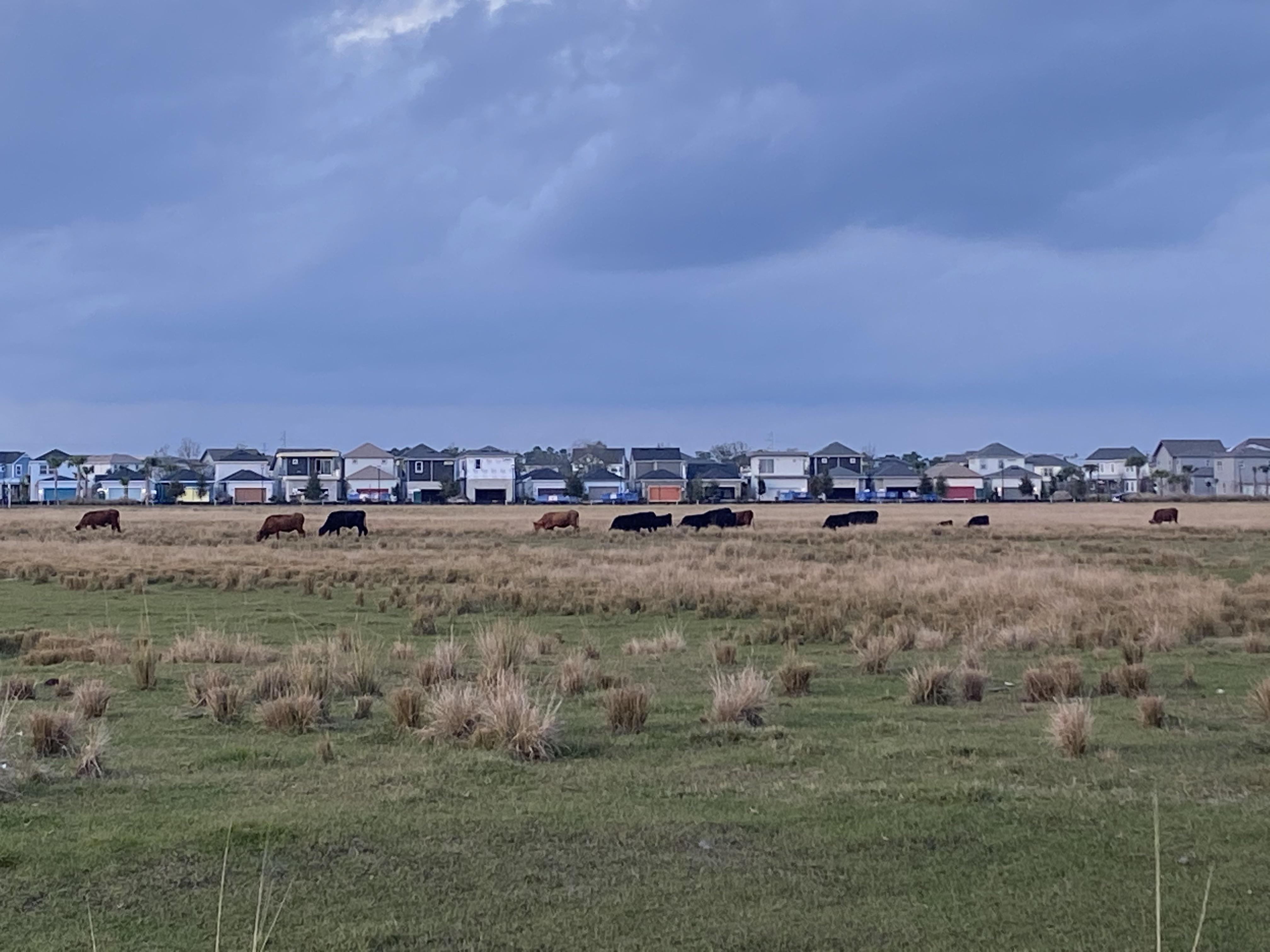
Long before anyone printed "Lake Nona" on a sign, the land east and west of Narcoossee Road was rural: wetlands, pine flatwoods, cypress heads, citrus groves and cattle. Not scenic-rural. Working-rural. The kind of land people farmed because it was cheap and far from town.
Housing existed, barely. The few homes out here clustered in Isle of Pines and around Lake Whippoorwill and Lake Hart — lake access, dirt-road quiet and a long drive to anything. Those two areas are the closest thing Lake Nona has to an original residential fabric, and both still exist. You can drive them this afternoon.
What kept the area rural was not lack of interest. It was lack of a road. Southeast Orange County had no fast connection to the rest of Orlando, and nobody builds ten thousand homes at the end of a two-lane. The Narcoossee Road corridor was the only artery, and it went north and south and nowhere else — a far cry from the road and its ongoing expansion today.
The fix arrived in stages. Construction on State Road 417 — the Southeastern Beltway and Southern Connector — began in 1989. The Southern Connector opened in 1993, and the full route was finished by the mid-1990s. Suddenly you could get here from downtown Orlando or Walt Disney World without ever touching I-4. More on how the GreeneWay and the Beachline tie the area together today.
Note the order, because it is the surprising part. The golf course was already here. It opened in 1986 — three years before crews broke ground on the expressway, and a full decade before the developer who would build the community bought the land.
Why "Lake Nona"?
Start with what is documented, because it settles the most common misconception: the name is older than the development. Lake Nona is a real lake — 587 acres of it, sitting in the Lake Hart watershed, mapped by the U.S. Geological Survey on the Pine Castle quadrangle. It carried that name on federal topographic maps long before anyone drew a master plan. Tavistock did not invent the name. They adopted one that was already there.
So who was Nona? Here the record thins out. Local tradition holds that the lake was named for a matriarch of one of the area's early homesteading families, remembered as "Miss Nona." The story is repeated widely among longtime Orlando families and it may well be true. It is also, as far as any published source goes, undocumented — no deed, no plat, no surname, no dates. Several accounts that repeat it confidently also get the development chronology wrong, which is not a great sign for their sourcing.
Where this stands: the lake and its name are a matter of federal survey record. Miss Nona is local tradition — a good story, honestly told, with nothing documented behind it yet.
If you have a family record, a plat or a photograph that pins it down, I would genuinely like to see it. Some of this history only survives in people's attics.
1986: The Golf Course Came First
The first piece of modern Lake Nona was not a hospital or a neighborhood. It was 18 holes.
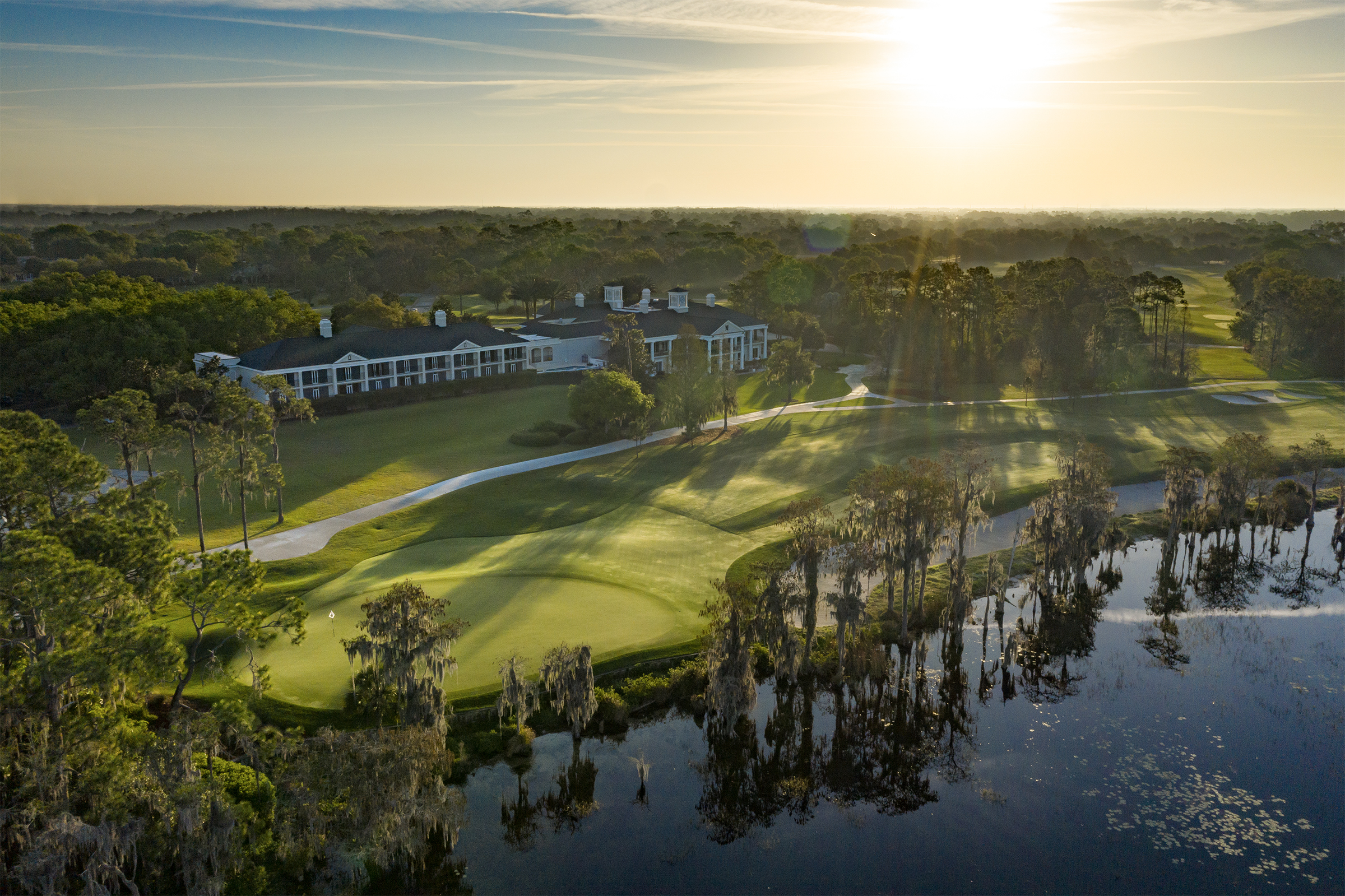
Lake Nona Golf & Country Club opened for play in 1986 — a Tom Fazio design on roughly 600 acres of lakefront and oak hammock, built at a moment when the surrounding land was still pasture. No expressway yet. No master plan yet. For several years it was an island of manicured Bermuda in the middle of nothing, reached by a two-lane road.
It also predates Tavistock entirely. The club was not part of the master-planned community — the master-planned community came ten years later and inherited a name the club had already made recognizable.
It did not stay quiet. David Leadbetter put the first U.S. franchise of his golf academy here. In 1990 the club hosted the inaugural Solheim Cup. In 1993 it hosted the World Cup of Golf. Touring professionals started buying houses along the fairways and never really stopped — the club's roster of resident pros is still the reason most golfers outside Florida have heard of Lake Nona at all. More on the club as it stands now.
For about a decade, "Lake Nona" meant a golf club. The 11,000-acre community came later and borrowed the name.
That sequence matters if you are reading old listings or old maps. A 1990s reference to Lake Nona almost certainly means the club, not the region. Today it is one of three golf communities in the Lake Nona area, alongside Eagle Creek and North Shore at Lake Hart.
1995–1996: The Map and the Buyer
In 1995 the City of Orlando initiated its Southeast Sector Plan — the zoning and land-use framework that designated this whole quadrant for large-scale mixed-use growth instead of leaving it agricultural acreage.
This is the least glamorous item on the page and arguably the most important one. Before the sector plan, the land was zoned to stay what it was. After it, a master-planned community became legally possible. Nobody photographs a land-use amendment, but Medical City does not exist without one.
In 1996 the Tavistock Group purchased roughly 7,000 acres on the west side of Narcoossee Road — the year after the sector plan, and three years after the Southern Connector opened. The sequence was not a coincidence. That holding has since grown to approximately 10,900 acres — about 17 square miles, larger than a lot of incorporated Florida cities.
A naming quirk that still causes confusion
Tavistock holds the trademark on "Lake Nona," so only properties inside their development area can use the name. Officially, Lake Nona is west of Narcoossee Road, inside Orlando city limits, in Orange County.
In practice the community is bigger than the trademark. Neighborhoods east of Narcoossee share the same schools, the same shopping, the same roads and the same daily life — which is why this site covers both sides. See where Lake Nona is for the boundary picture, or browse all Lake Nona neighborhoods.
2005–2006: The Deal That Made Medical City
Everything above is prologue to a three-year stretch in the mid-2000s.
The idea came first. In 2003 the concept of a concentrated health and life-sciences district — what became Medical City — took shape as part of the long-range vision for the property. An idea is not a hospital, but it is what the next two years were spent trying to fund.
In 2005, Tavistock donated $12.5 million and 50 acres to the University of Central Florida to help establish a medical school. It was a bet: land and cash traded for an anchor institution that would make the rest of the acreage worth something entirely different.
On March 23, 2006, the Florida Board of Governors voted 15 to 1 to approve UCF's proposal for a college of medicine. That vote is the hinge. One side of it is cattle country with a golf course. The other side is a life-sciences cluster, a research corridor, tens of thousands of homes and a road network built to carry them. The school that vote created is covered in the UCF College of Medicine story.
The Timeline at a Glance
| Year | Milestone | Type | Why it mattered |
|---|---|---|---|
| Pre-1980s | Ranch, grove and wetland; scattered homes at Isle of Pines and the Lake Whippoorwill / Lake Hart lakes | Rural | The baseline. Cheap land, no road, no reason to build. |
| 1986 | Lake Nona Golf & Country Club opens — Tom Fazio design, roughly 600 acres | Golf | First modern development. Establishes the name regionally. |
| 1989 | Construction begins on State Road 417, the Southeastern Beltway and Southern Connector | Roads | The access problem starts getting solved. |
| 1990 | Club hosts the inaugural Solheim Cup | Golf | International attention on a place with almost nothing else built. |
| 1993 | Club hosts the World Cup of Golf | Golf | Cements the resident-pro reputation that persists today. |
| 1993 | Southern Connector of SR 417 opens | Roads | Downtown Orlando and Disney reachable without I-4. Remote becomes accessible. |
| 1995 | City of Orlando initiates the Southeast Sector Plan | Planning | Rezones the quadrant for mixed-use growth. Makes everything after it legal. |
| 1996 | Tavistock Group purchases roughly 7,000 acres west of Narcoossee Road | Land deal | The master-planned community gets an owner and a plan. |
| 1999 | Northlake Park opens, along with its community school and the YMCA | Residential | First neighborhood of the master plan. The community stops being theoretical. |
| 2003 | The Medical City concept is born | Vision | The idea that reframed the whole property. |
| 2005 | Tavistock donates $12.5 million and 50 acres to UCF | Land deal | Buys the anchor institution. |
| March 23, 2006 | Florida Board of Governors approves UCF's medical college, 15–1 | Approval | The hinge. Medical City becomes real. |
After the 2006 vote the story stops being about land and starts being about buildings — the medical school opening to students, a children's hospital, a VA medical center, a research campus, a teaching hospital, a town center, a tennis campus. That chapter has its own page.
Continue the story
The post-2006 build-out — every hospital, research institute and academic campus, in order.
Lake Nona on Film
This one was produced somewhere between 2016 and 2018, during the stretch when the community was filling in fastest. It carries no date on screen, and what it shows is still recognisably the Lake Nona you would drive through this afternoon.
Four minutes, and worth it if you would rather get a feel for the place than read about it.
What none of them show is the part this page is about — the thirty years before any of it was built.
Where the History Is Still Visible
Most of this is not in a museum. It is in the ground, and you can go look at it.
Isle of Pines
Pre-development lakefront lots on Lake Mary Jane. Big trees, no uniform rooflines, and a road grid that predates the master plan. Nearby: Split Oak Forest.
Lake Whippoorwill & Lake Hart
The other original pocket. Acreage lots and lake access on land that was rural long before Narcoossee had a traffic light — still the heart of the Lake Hart chain.
Lake Nona Golf & Country Club
The 1986 course that started it — the oldest piece of modern Lake Nona still doing exactly what it was built to do.
Moss Park & the conservation land
Orange County's largest park preserves the landscape the rest of this used to look like — the before picture, kept on purpose. See camping and boating at Moss Park.
Newer neighborhoods carry the history in their names more than their bones. Northlake Park, Water's Edge and Village Walk were among the earliest residential phases of the master-planned community — the first neighbors after the golfers. Laureate Park came later, built around the Medical City that the 2006 vote set in motion.
One more thing about the cows. They did not all leave. Drive far enough out Narcoossee, or east past the last roundabout, and there is still pasture with cattle standing in it, a few minutes from a research hospital.
That gap between the two is the actual story of this place, and it is closing fast enough that it is worth going to look at while it is still there.
Lake Nona History: Frequently Asked Questions
Who was Lake Nona named after?
The community is named for Lake Nona itself, a 587-acre natural lake in the Lake Hart watershed that appears under that name on U.S. Geological Survey topographic maps well before any development. Local tradition holds that the lake was named for an early homesteading family matriarch remembered as "Miss Nona," but no documented record has surfaced to confirm it. The lake name is verifiable; the person behind it is not.
What was Lake Nona before it was developed?
Rural southeast Orange County: cattle ranch, citrus grove, pine flatwoods and wetland. The only meaningful housing was scattered around Isle of Pines and the Lake Whippoorwill and Lake Hart areas. The land stayed rural largely because there was no fast road connection: construction on SR 417 did not begin until 1989, and the Southern Connector opened in 1993.
When did Tavistock buy the land?
In 1996 — ten years after the golf club opened, and a year after Orlando's Southeast Sector Plan rezoned the quadrant. The Tavistock Group purchased roughly 7,000 acres on the west side of Narcoossee Road, a holding that has since grown to approximately 10,900 acres, or about 17 square miles. Be careful with dates you find elsewhere on this subject — several widely repeated accounts place the purchase in the 1980s, which cannot be right.
What came first in Lake Nona?
Lake Nona Golf & Country Club, which opened in 1986. For roughly a decade after that, "Lake Nona" referred to the golf club rather than to a region. The master-planned community and Medical City came later.
When did Medical City start?
The decisive events were in 2005 and 2006 — a Tavistock donation of $12.5 million and 50 acres to the University of Central Florida, followed by the Florida Board of Governors voting 15–1 on March 23, 2006 to approve UCF's college of medicine. The buildings came afterward; that timeline is covered on the Medical City page.
Is everything called "Lake Nona" actually Lake Nona?
Officially, no. Tavistock holds the trademark, so the name applies to their development area west of Narcoossee Road inside Orlando city limits. In practice the community extends east of Narcoossee as well, sharing schools, shopping and roads. Both sides are covered on this site.
Which Lake Nona neighborhoods are the oldest?
Isle of Pines and the Lake Whippoorwill and Lake Hart areas predate the master-planned community entirely. Within the Tavistock development, Northlake Park, Water's Edge and Village Walk were among the earliest residential phases.
Address Search
 David Myers 407-801-3286
Your Lake Nonahood Expert
Learn * Research * Buy * Sell
Your Guide to the Best Nonahoods!

Nona Region Interactive Map Search

Popular Nona Searches

Nona FYI