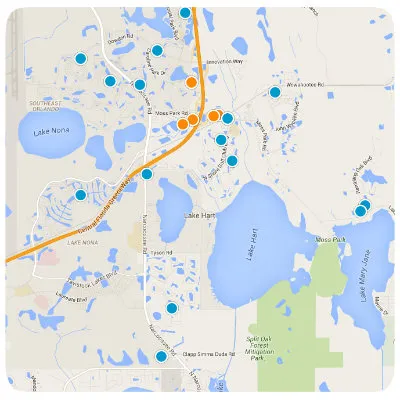
A nonprofit wildlife hospital and walking refuge on the southern edge of Lake Nona, sharing an entrance road with the Split Oak Forest trailhead.
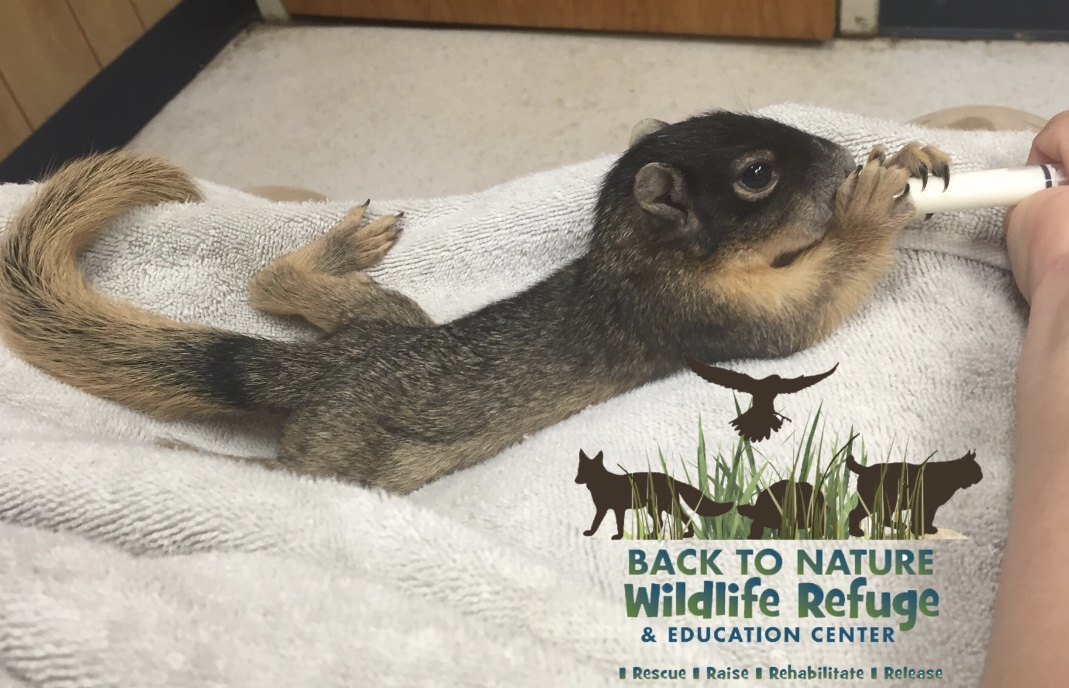
Back to Nature Wildlife Refuge is a nonprofit 501(c)(3) wildlife rehabilitation center at 10525 Clapp Simms Duda Road, Orlando, on the southern edge of Lake Nona. It sits on about 20 acres of Eagles Roost, a 232-acre Orange County conservation property next to Split Oak Forest. The refuge takes in several thousand injured and orphaned Florida animals a year and releases those that recover. About 30 non-releasable animals live there permanently as "educational ambassadors" that visitors see on a self-guided wildlife walk. It reopened to the public in July 2025 after a closure of about five years, with new buildings funded by Orange County.
Most Lake Nona attractions were built on purpose: Boxi Park, the Wave Hotel, the Town Center. Back to Nature Wildlife Refuge was not. It started in 1989 as one family caring for hurt animals at their home in Bithlo, and it ended up a few miles south of Lake Nona because Orange County had conservation land that needed a tenant who would look after wildlife.
For residents that makes it two things at once. It is an hour-long outing with young kids that costs little and sits closer than any theme park. It is also the place to call when a hawk hits your lanai screen or a cat brings home a baby squirrel, which happens more often than you would expect in a community that is still building out into former ranch land.
Where is Back to Nature Wildlife Refuge, and how far is it from Lake Nona?
Back to Nature is at 10525 Clapp Simms Duda Road, Orlando, FL 32832, just south of Eagle Creek and about 8 miles from Lake Nona Town Center.
| Address | 10525 Clapp Simms Duda Rd, Orlando, FL 32832 |
|---|---|
| Distance from Lake Nona Town Center | About 8 miles |
| Setting | About 20 acres of Eagles Roost, a 232-acre Orange County conservation property beside Split Oak Forest |
| Operated by | Back to Nature Wildlife, Inc., a 501(c)(3) nonprofit |
| Founded | June 1989, in Bithlo; moved to Eagles Roost in 2014 |
| Visiting days | Typically Tuesday through Sunday, 9 a.m. to 4 p.m.; closed Mondays. Confirm on the refuge's website before you go |
| Admission | A modest per-person fee; children under 3 are free |
| Plan for | About an hour |
The drive is the reason most residents have never been. From Lake Nona you head south on Narcoossee Road past Eagle Creek, then east onto Clapp Simms Duda Road, a two-lane road through pasture and pine. The refuge and the main Split Oak Forest trailhead share the same address, so the parking area serves both.
What is Back to Nature, and how did it end up next to Lake Nona?
Back to Nature is a wildlife hospital first and a visitor attraction second: its mission is to rescue, raise, rehabilitate and release injured or orphaned Florida native species.
The organization began in June 1989 when Carmen Shaw and her family started caring for injured and orphaned animals at their home in Bithlo, east of Orlando, behind the family's automotive garage. It incorporated as Back to Nature Wildlife, Inc. and grew into one of the largest wildlife rehabilitation programs in Central Florida.
The move toward Lake Nona came through Orange County's Green PLACE program, which buys environmentally sensitive land. The county first leased part of Eagles Roost to the refuge in 2007, and the operation moved there in 2014, taking about 20 acres of the 232-acre wildlife corridor next to Split Oak Forest.
The site then closed to the public for roughly five years, through the pandemic and a rebuild. Orange County put about $5.6 million into a new visitor center, a food preparation building and an animal care building, replacing the portable structures the refuge had used since the move. The new buildings are poured concrete block, which matters to a hospital that has to keep patients safe through hurricane season. The refuge held its grand reopening in July 2025.
A correction to older write-ups, including an earlier version of this one: the refuge is not inside Split Oak Forest, and it did not move there in 2010. It sits on Eagles Roost, a separate county property that borders the forest.
What will you see on a visit?
A visit is a self-guided walk past the enclosures of about 30 permanent residents, the animals that recovered from their injuries but cannot survive in the wild.
The refuge calls these animals "educational ambassadors." The roster changes over time, but it has included owls and hawks, bobcats, foxes and several tortoise species. A few residents are not Florida natives at all: the refuge also keeps lemurs, goats and an emu, which tend to be the favorites with young children.
Signs along the walk explain each animal and why it cannot go back to the wild. The common causes rehabilitators see are cars, pets, fishing line and well-meaning people who raised a baby animal until it could no longer fend for itself. That is the real lesson of the walk, and it lands with kids better than a lecture would.
What you will not see are the animals being treated. Rehabilitation patients are kept away from people so they stay wild enough to be released, which is the point of the place. Guided tours and group visits are available by reservation through the refuge.
Is Back to Nature a good outing for young kids?
Yes, for children roughly two to ten it is one of the easiest nature outings near Lake Nona: short, outdoors, inexpensive and close.
The walk takes about an hour, which is the right length for a preschooler, and the animals are close enough to see without binoculars. Pair it with a short walk into Split Oak Forest from the same parking area if your kids still have energy, or save the forest for a cooler morning.
Two practical notes. The walk is outdoors, so go early on summer days and bring water. And the refuge closes in the late afternoon and on Mondays, so it does not work as an after-school stop on most weekdays. For a full day of animals, Gatorland is the bigger outing; Back to Nature is the smaller, quieter and much cheaper one.
What should you do if you find injured wildlife in Lake Nona?
Keep pets and children away, do not feed or give water to the animal, and call a licensed wildlife rehabilitator such as Back to Nature before you move it.
Lake Nona's neighborhoods back onto lakes, wetlands and conservation land, so residents regularly find hurt or orphaned wildlife: baby squirrels and rabbits, birds that hit windows, turtles crossing roads, the occasional owl. Back to Nature staff have said many of their squirrel patients are injured by cats and dogs that are let outside.
Call before you drive anything over. Many young animals that look abandoned are not, and a rehabilitator can tell you over the phone whether to leave a fledgling where it is or bring it in. If you do need to move an animal, a ventilated box lined with a towel, kept dark and quiet, is safer than handling it. Never try to pick up a raptor, snake or adult mammal yourself.
The Florida Fish and Wildlife Conservation Commission keeps a statewide list of licensed rehabilitators if Back to Nature cannot take a particular animal.
How does a visit fit with Split Oak Forest and Moss Park?
The refuge is the easy entry point to the largest block of protected land on Lake Nona's southern edge, and it combines well with a hike.
Split Oak Forest Wildlife and Environmental Area is about 1,689 acres of protected habitat for gopher tortoises and other upland species, managed by the Florida Fish and Wildlife Conservation Commission. Its main trailhead is on the same Clapp Simms Duda Road property as the refuge. On the far side of the forest, Orange County's Moss Park offers camping, boating and its own trails along Lake Hart and Lake Mary Jane.
A half-day plan for a family that likes being outside: walk the refuge first while it is cool, then take a short loop into Split Oak. For a quieter preserve closer to the lakes, the Isle of Pine Preserve is another option. Lake Nona's other parks and trails are collected on the Lake Nona parks and recreation guide.
Pros, Cons and Our Take
Pros
- One of the closest attractions to south Lake Nona neighborhoods, with no highway driving
- Inexpensive compared with any Orlando theme park or zoo, and admission helps fund wildlife care
- About an hour long, which suits toddlers and preschoolers
- Rebuilt facilities that opened in 2025
- Doubles as a resource residents can call about injured or orphaned wildlife
Cons
- Small: it is a rehabilitation center with a walking path, not a zoo, and most visitors are done in an hour
- Daytime hours only, with a late-afternoon close and Mondays off
- Outdoors in Florida heat; summer visits are best first thing in the morning
- The rural road and shared trailhead parking are easy to miss the first time
Our Take
Back to Nature is not a destination you will build a weekend around, and it does not pretend to be. It is a short, honest look at what happens to wildlife when a fast-growing community moves into its habitat, run by a nonprofit that has done this work since 1989. For Lake Nona families with young children, it is worth one visit, and worth saving the phone number.
What the Neighbors Know
The refuge is closest to the neighborhoods on Lake Nona's southern side: Eagle Creek, Isle of Pines, Isles of Lake Nona, Fell's Landing, Cove at Nona Sound and Estates at Nona Sound. Living out here means the conservation land is a real neighbor. Gopher tortoises, sandhill cranes and the occasional bobcat are part of the deal, and the refuge is where many of the injured ones end up.
Buyers who want that kind of setting tend to look at homes that back onto preserve or water rather than other houses. You can compare communities on the Lake Nona neighborhoods page, and find more nearby outings on the Nona Fun attractions and entertainment hub.
Official Sources
- Back to Nature Wildlife Refuge
- Split Oak Forest Wildlife and Environmental Area (FWC)
- Florida Fish and Wildlife Conservation Commission
Buying or selling in Lake Nona? Call/Text David Myers at 407.801.3286 or use the contact form.
Frequently Asked Questions
Where is Back to Nature Wildlife Refuge?
Back to Nature Wildlife Refuge is at 10525 Clapp Simms Duda Road, Orlando, FL 32832, on Orange County's Eagles Roost conservation property next to Split Oak Forest, just south of Lake Nona's Eagle Creek neighborhood.
Is Back to Nature Wildlife Refuge open to the public?
Yes. The refuge reopened to visitors in July 2025 after a closure of about five years. It is typically open Tuesday through Sunday from 9 a.m. to 4 p.m. and closed on Mondays; check the refuge's website before visiting.
How much does it cost to visit Back to Nature?
Admission is a modest per-person fee that supports the refuge's animal care, and very young children are free. Current prices are posted on the refuge's website.
Is Back to Nature inside Split Oak Forest?
No. The refuge sits on Eagles Roost, a separate 232-acre Orange County conservation property that borders Split Oak Forest. The two share an entrance off Clapp Simms Duda Road.
What should I do if I find an injured animal in Lake Nona?
Keep pets and people away, do not feed the animal or give it water, and call a licensed wildlife rehabilitator such as Back to Nature before moving it. Many young animals that look abandoned are not, and the rehabilitator can tell you whether to bring it in.