Lake Nona › Blog Nona › Nona Heath/Wellness › UF Lake Nona Research and Academic Center
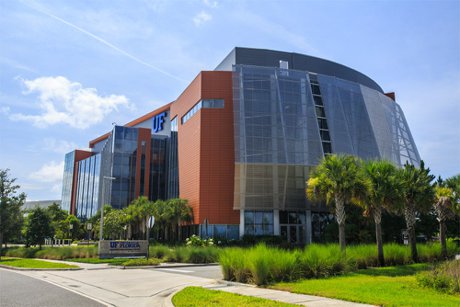 In a neighborhood designed around the future of health, medicine, and innovation, the University of Florida’s Lake Nona Research and Academic Center stands out as a quiet but essential player. It may not have the flash of a hospital or the foot traffic of a performance club, but what it lacks in visibility, it makes up for in brainpower. This center, often referred to simply as UF’s Lake Nona campus, is a scientific anchor in Lake Nona’s growing ecosystem, and its influence is only just beginning to be fully understood.
Located within walking distance of major institutions like the UCF College of Medicine, Nemours Children’s Hospital, and the Orlando VA Medical Center, the UF Lake Nona Research and Academic Center opened its doors in 2012. It was one of the earliest academic institutions to break ground in what would become Lake Nona’s Medical City, a 650-acre health and life sciences district intentionally designed for cross-institutional collaboration. At the time, the center represented a bold move for the University of Florida—a major public research institution based in Gainesville—to establish a significant physical and academic presence in Central Florida.
The decision to expand into Lake Nona wasn’t made lightly. The University of Florida was already a national leader in health sciences, with top-ranked programs in pharmacy, medicine, and biomedical research. But the opportunity to co-locate with other major players in a master-planned health district presented a unique chance to extend its influence, test new models of academic programming, and create a true satellite research hub with statewide impact.
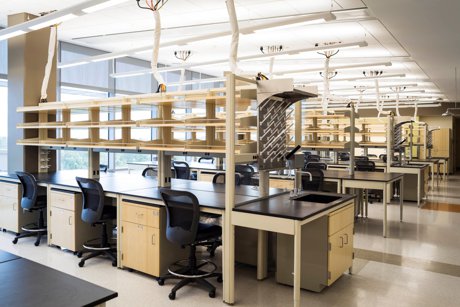
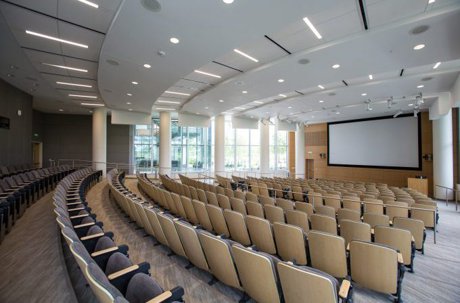
The facility itself spans roughly 100,000 square feet and was designed from the ground up as a multi-use academic and research space. The building houses classrooms, laboratories, clinical training areas, faculty offices, and collaboration zones—all optimized for interdisciplinary work. One of its primary tenants is the UF College of Pharmacy, which uses the facility as one of its regional campuses, offering a full four-year Pharm.D. program. The Lake Nona campus gives students the ability to complete all coursework and experiential learning locally, while still earning a degree from one of the nation’s top pharmacy schools.
From the beginning, the center was meant to be more than a teaching site. It was also conceived as a launchpad for high-impact research and a place where translational science could thrive. That’s science speak for research that moves from the lab bench to real-world application—and this kind of work is central to UF’s academic mission. At the Lake Nona campus, research efforts focus on a wide range of health priorities, including personalized medicine, pharmacogenomics, drug discovery, and chronic disease management.
 What makes the Lake Nona location especially valuable is its proximity to other research and clinical institutions. Faculty at the center regularly collaborate with researchers from Nemours, UCF, and the VA Medical Center. This proximity allows for faster data sharing, joint grant applications, and access to a wider patient population for clinical trials. It's the kind of intellectual cross-pollination that Lake Nona was built to encourage, and the UF center is a textbook example of that vision in action.
One of the most significant areas of research emerging from the center involves metabolomics—the study of small molecules involved in metabolism—and its role in precision medicine. Researchers at the Lake Nona campus have been developing new tools to analyze how genetic and environmental factors influence an individual’s response to medication. This work has the potential to completely reshape how medications are prescribed, moving from one-size-fits-all guidelines to highly personalized treatment protocols based on a patient’s unique biology.
In addition to its pharmacy program, the UF Lake Nona Center is involved in interdisciplinary education and outreach. Programs are developed in coordination with UF’s Colleges of Medicine, Dentistry, Public Health, and Nursing, creating a space where inter-professional learning can happen in real time. This model of education is designed to prepare future health professionals to work in collaborative environments—a necessity in modern patient care, where outcomes depend on coordinated efforts between physicians, pharmacists, nurses, and therapists.
The student body at the Lake Nona center is intentionally small, allowing for close mentorship and hands-on learning. Students benefit from access to research faculty, clinical partnerships with nearby hospitals, and a strong sense of community. Many of the students who complete their training here go on to work in Central Florida’s growing healthcare sector, contributing directly to the region’s workforce and continuing the pipeline of talent that Lake Nona depends on.
From a broader academic standpoint, the Lake Nona campus has helped UF extend its reach beyond Gainesville in meaningful ways. It allows for deeper partnerships with institutions in the Orlando area, greater access to diverse patient populations for research, and a stronger role in influencing regional health policy. It also serves as a showcase for the university’s commitment to innovation, public health, and statewide service.
 The center’s work has not gone unnoticed. Faculty at the Lake Nona site have received millions of dollars in research funding, published widely in peer-reviewed journals, and contributed to major national studies. In many cases, the facility has allowed researchers to operate more independently and more collaboratively than they could in a larger, more crowded academic environment. That flexibility is one of the advantages of being located in a fast-growing, purpose-built community like Lake Nona.
As of today, the center continues to expand its academic and research portfolio. Future plans include adding graduate programs in data science and health informatics, expanding clinical training opportunities, and deepening partnerships with industry players through joint research ventures and internship pipelines. The university is also considering expanding the physical facility itself, with proposals on the table for additional lab space and teaching rooms.
One promising area of development involves the integration of artificial intelligence and machine learning into pharmacy and clinical research. By partnering with UF’s world-renowned AI initiative in Gainesville, the Lake Nona center is positioning itself at the forefront of tech-driven health solutions. This work includes predictive analytics for medication adherence, AI-assisted drug discovery, and machine learning models that can flag at-risk patients before complications occur.
Another forward-looking initiative involves community-based health projects. Faculty and students are working on mobile health clinics, community education programs, and telehealth platforms that extend the reach of UF’s expertise beyond Lake Nona’s borders. These programs are designed to improve outcomes in under-served populations and to test new models of care that could eventually be implemented statewide.
 What makes the UF Lake Nona Research and Academic Center unique isn’t just its facilities or its location—it’s the way it brings together education, research, and collaboration in one streamlined space. In a world where higher education and healthcare are both under pressure to innovate, the Lake Nona center offers a model for how academic institutions can stay nimble, relevant, and deeply engaged in the communities they serve.
For Lake Nona, the center adds intellectual capital and stability. It attracts faculty, students, and funding. It creates jobs and launches projects. It strengthens the area’s identity as a place where serious research is done—not in isolation, but in partnership with other institutions, with patients, and with the broader health ecosystem.
As Lake Nona continues its trajectory as one of the most future-focused communities in the country, the University of Florida’s presence ensures that education and science remain at the center of that journey. The Research and Academic Center might not be the flashiest building in Medical City, but it’s one of the most important. It’s where new medicines are discovered, future healthcare providers are trained, and bold ideas about the future of health are tested in real time.
In that sense, it’s doing exactly what it was built to do—and it’s only just getting started. Visit today at: https://lakenona.ufhealth.org/

:format(webp):quality(80)/u.realgeeks.media/lakenonafloridaproperties/Lake_Nona_Buyers_Guide_Square.jpg)
:format(webp):quality(80)/u.realgeeks.media/lakenonafloridaproperties/lake-nona-map-search.jpg)
:format(webp):quality(80)/u.realgeeks.media/lakenonafloridaproperties/lakenonafloridaproperties-realtor-david-myers-sidebar.jpg)