Lake Nona › Blog Nona › Nona Tech/Innovation › SIMCOM Aviation Training Center
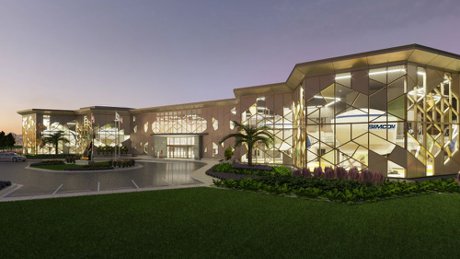 While much of Lake Nona is known for innovation in healthcare, education, and technology, another sector is quietly soaring—aviation. And leading the charge is the SIMCOM Aviation Training Center, a cutting-edge facility that brings global attention to the region’s rapidly growing reputation as a training hub for aviation professionals.
SIMCOM is hardly a new name in the aviation world. Founded in 1989, the company has spent over three decades providing simulator-based flight training to pilots across a wide range of aircraft platforms. Its clients include everyone from private jet owners to corporate aviation departments to military contractors. What sets SIMCOM apart from many other aviation training providers is its laser focus on delivering personalized, scenario-based training using high-fidelity flight simulators that closely replicate real aircraft behavior.
In 2020, SIMCOM made headlines when it announced the relocation and expansion of its global headquarters to Lake Nona. The move was more than a logistical upgrade—it represented a strategic pivot. SIMCOM wanted not just more space, but a place that reflected its forward-thinking approach to training and its vision for the future of aviation. Lake Nona’s reputation as a smart city, along with its access to major transportation routes and its emphasis on innovation, made it an ideal fit.
The new SIMCOM Aviation Training Center is a 90,000-square-foot facility located on a dedicated campus designed specifically to meet the demands of 21st-century pilot training. The building includes administrative offices, briefing rooms, classroom spaces, simulator bays, and advanced technical support areas. Every inch of the facility was purpose-built, with attention to the complex requirements of operating large, high-tech flight simulators that replicate everything from cockpit instrumentation to aircraft physics.
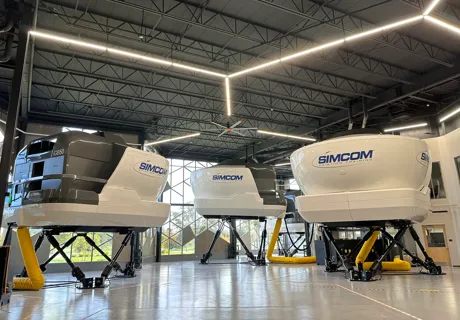 The core of the center is its growing fleet of flight simulators. At launch, the facility housed over a dozen full-motion and fixed-base simulators, with plans to expand to more than 30 as additional aircraft platforms are added. These simulators include popular business jet models like the Cessna Citation, Embraer Phenom, Pilatus PC-12, and the Daher TBM series. Each simulator is FAA-certified and capable of providing training for initial type ratings, recurrent certification, and specialized training scenarios like engine failures, emergency procedures, and adverse weather operations.
What makes SIMCOM’s approach to training unique is the integration of realism and repetition. Rather than relying on scripted lessons, instructors guide pilots through realistic, sometimes unpredictable scenarios that simulate the challenges of real-world flying. This includes things like unexpected system failures, runway incursions, and in-flight weather changes. The goal is not just to check boxes for regulatory compliance, but to create pilots who are better prepared, more confident, and more adaptable.
The Lake Nona facility was designed from day one to support this philosophy. Simulator bays are isolated to minimize vibration and noise. The technical infrastructure includes climate control systems to maintain precise operating conditions for sensitive simulator equipment. The entire simulator floor is connected to a control center where technicians monitor the performance and calibration of each device in real time. Downtime is minimized, and training schedules are kept tight—a critical factor for professional pilots on compressed re-certification timelines.
In addition to the simulators, the training center includes spacious briefing rooms and debriefing suites where pilots can meet with instructors, review flight data, and run through video and telemetry analysis of their simulator sessions. These post-flight evaluations allow for detailed discussions of pilot decision-making, procedural accuracy, and workload management. It’s a level of feedback that mirrors what one would find in military or commercial airline training and reinforces SIMCOM’s reputation for professional-grade instruction.
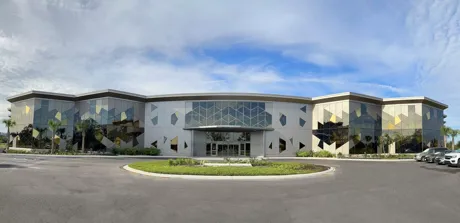 But SIMCOM’s move to Lake Nona wasn’t just about physical infrastructure—it was about access to talent, technology, and community. The company has hired dozens of new employees, including flight instructors, engineers, technicians, and support staff. Many of these roles require advanced technical training and offer high-paying career pathways, adding to the region’s skilled labor market and supporting Lake Nona’s broader economic development.
Instructors at SIMCOM are often former airline captains, military pilots, or long-time business aviation professionals. They bring not only technical knowledge but years of lived experience that adds context and nuance to each lesson. SIMCOM prioritizes instructor quality above all else, believing that even the most advanced simulator can’t replace the value of a highly experienced educator in the training process.
From a technology standpoint, SIMCOM continues to invest in the latest simulation advancements. The Lake Nona facility features new Level D full-flight simulators equipped with wraparound visual systems, motion platforms, and avionics identical to those found in current-production aircraft. The company also integrates scenario-based training software that allows instructors to create custom training sessions on the fly, adjusting variables in real time based on pilot performance.
Another area of expansion for SIMCOM involves partnerships with aircraft manufacturers. Several OEMs have designated SIMCOM as an official training provider for their aircraft, meaning pilots who purchase a new aircraft receive type-specific training at SIMCOM as part of the delivery process. These partnerships have grown with the Lake Nona expansion and have led to increased demand for factory-authorized courses that align with the latest avionics, automation systems, and regulatory changes.
SIMCOM’s client base is global. Pilots travel from all over the U.S., Latin America, and Europe to train at the Lake Nona facility. The center’s proximity to Orlando International Airport makes it easy for trainees to fly in and out on tight schedules, and the Lake Nona campus provides a modern, welcoming environment that matches the professional expectations of its clientele.
The facility also plays a role in corporate and government aviation training. In recent years, SIMCOM has hosted pilots from Fortune 500 flight departments, federal agencies, and specialized charter services. The training often includes custom-designed courses that meet specific mission profiles, regulatory requirements, and organizational policies. This level of customization is a growing differentiator for SIMCOM and one of the reasons it continues to earn repeat business from aviation departments with complex training needs.
Looking ahead, SIMCOM has ambitious plans for its Lake Nona campus. The company is actively pursuing additional simulator certifications and is in talks with new aircraft manufacturers to expand its offerings. The long-term vision includes expanding the training center footprint with additional buildings dedicated to maintenance training, ground operations, and unmanned systems instruction.
 Drone operations and advanced air mobility are also areas of growing interest. As the aviation industry moves toward electric vertical takeoff and landing (eVTOL) aircraft, there is a recognized need for training that addresses the unique operational, regulatory, and technical challenges of these platforms. SIMCOM is exploring how its simulator infrastructure and training expertise can be adapted to support this emerging sector—potentially making Lake Nona a leader in the next generation of aviation training.
Another area of expansion is digital learning. While in-person simulator training remains essential, SIMCOM is developing online and blended learning programs that allow pilots to complete certain portions of their training remotely. These programs include e-learning modules, virtual classrooms, and flight scenario simulations that can be run on desktop platforms. The digital tools are designed to supplement in-person training and improve knowledge retention, especially for pilots who return to SIMCOM year after year for recurrent certification.
SIMCOM’s presence in Lake Nona reinforces the community’s reputation as a place where world-class infrastructure meets bold ideas. While other aviation training providers are clustered in legacy markets like Dallas or Denver, SIMCOM’s choice to build in Lake Nona positions it at the leading edge of a new kind of training ecosystem—one that values not just technology and efficiency, but collaboration, innovation, and a commitment to professional excellence.
For Lake Nona, SIMCOM brings more than jobs and square footage. It brings international visibility, high-value talent, and a new vertical of industry influence. It proves that Lake Nona is not just a destination for healthcare and education, but for aerospace and advanced training. And it creates opportunities for future partnerships with universities, technology developers, and aviation manufacturers that can further anchor the region’s growth.
As aviation evolves—through new technologies, changing regulations, and shifting global dynamics—training will remain a cornerstone of safety and performance. SIMCOM’s Lake Nona campus is built not just for today’s aviation needs, but for the needs of tomorrow’s pilots, engineers, and innovators.
It’s not just a training center. It’s a launchpad. Visit them today at: https://www.simulator.com/